Is She Dressing for Herself or for the Group? How to Help Your Girl Find Out
The Morning Closet Moment Tells You a Lot
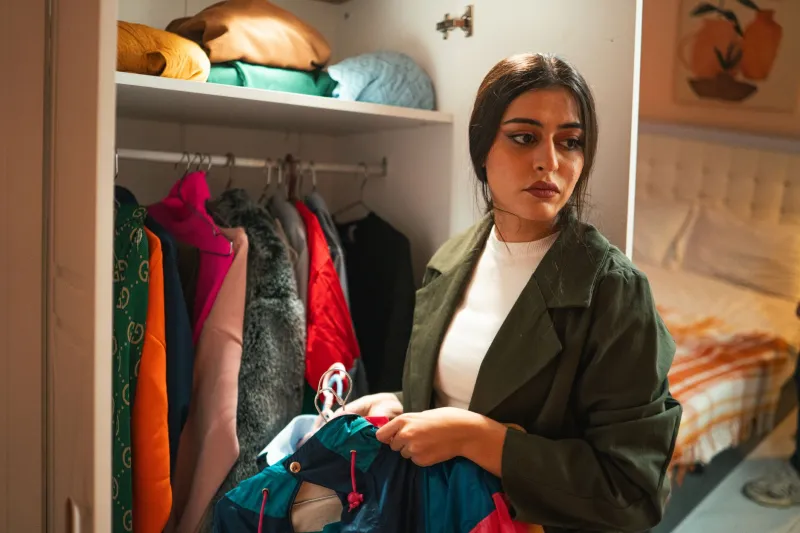
Watch your daughter get dressed sometime. Not in a hovering way — just pay attention. Does she pull something out and light up? Or does she stand there scrolling through mental images of what her friend group wore yesterday, trying to reverse-engineer the right answer?
That moment, the one right before she decides, is where a lot of important stuff is happening. Getting dressed isn't just about clothes. For girls, especially between the ages of six and twelve, what they put on their bodies is often a live conversation with the social world around them. And that's not a bad thing — but it's worth understanding.
The goal isn't to raise a kid who ignores her friends' opinions entirely. That's not realistic, and honestly, caring about belonging is just human. The goal is to help her stay connected to her own preferences while she navigates all that social noise.
What "Dressing to Fit In" Actually Looks Like
It's easy to assume you'd notice if your daughter was dressing to please others rather than herself. But it's usually more subtle than you'd expect.
Some signs to look for:
- She wears something and seems uncomfortable in it all day, even though she chose it herself
- She asks "will my friends think this is weird?" more than she asks "do I like this?"
- She stops wearing pieces she used to love after a comment from a classmate — even a mild one
- Her style shifts dramatically every time her friend group changes
- She describes clothes in terms of what other people will think, not how they make her feel
None of these are emergencies. They're just signals. And they're worth gently exploring.
The Friendship Outfit Exercise (Try This on a Sunday)
Here's a simple activity that opens up a lot of conversation without feeling like a lecture. Pull out five or six outfits from her closet — a mix of things she reaches for constantly and things she hasn't touched in a while. Lay them on the bed.
Then ask her to sort them into two piles: "outfits I'd wear if I were going somewhere alone" and "outfits I'd wear to hang out with my friends."
Here's where it gets interesting. If the piles are almost identical, she's probably dressing from a pretty grounded place. If they're totally different — especially if the "alone" pile is more colorful, more quirky, more her — that's your conversation starter.
You're not looking for a right answer. You're looking for a moment where she notices something about herself. Ask her why certain pieces ended up where they did. Let her talk. Listen more than you respond.
Why Girls Drift Away From Their Own Style
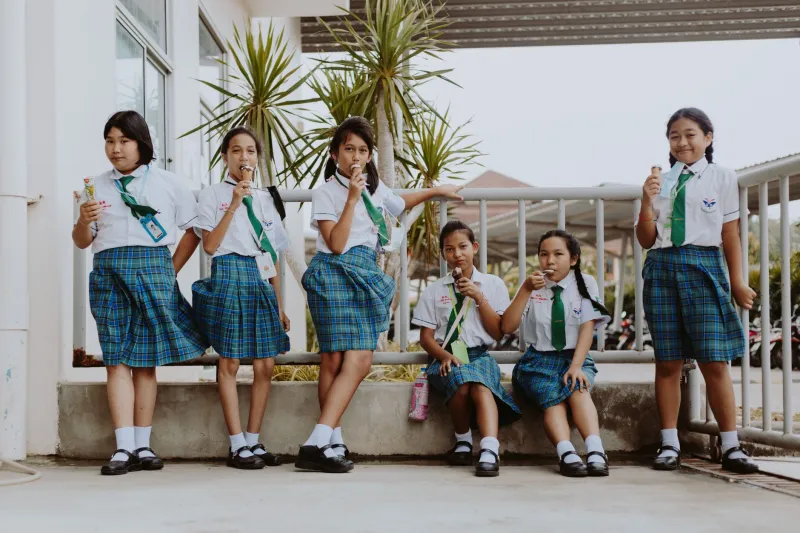
It helps to understand what's actually pulling your daughter toward group dressing. It's not weakness or shallowness — it's social intelligence. Kids are wired to read their environment and adapt. In middle childhood especially, belonging feels like survival. Wearing the wrong thing can feel like showing up to school with a target on your back.
Social media has added a layer on top of all that. Even girls who aren't on Instagram yet are influenced by it, because their friends are on it. Trends move faster than ever. Something can feel totally essential on Monday and embarrassing by Thursday. That's a lot of pressure on a ten-year-old trying to figure out who she is.
The problem isn't that she wants to fit in. The problem is when fitting in starts to crowd out the parts of herself she actually loves.
Starting Conversations That Don't Feel Like Interrogations
Parents often want to talk about authenticity and self-expression, but the conversation lands weird because it comes out sounding like a TED talk. Keep it casual. Keep it specific.
Instead of "I want you to dress for yourself, not for others," try:
- "Hey, I noticed you haven't worn that yellow hoodie in a while. What happened to it?"
- "What's your favorite thing you own right now? What do you love about it?"
- "Is there anything in your closet you kind of wish you could wear but feel weird about?"
Those small questions open bigger doors. And they communicate something important without spelling it out: your taste matters, and I'm curious about it.
Building a Wardrobe That Holds Both Worlds
Here's some good news: your daughter doesn't have to choose between belonging and being herself. The two can coexist in her closet.
Help her identify a few "bridge pieces" — items that feel genuinely like her AND fit comfortably within what her friend group wears. A pair of sneakers she loves that also happen to be popular. A hoodie in her favorite color that also matches the casual vibe of her crew. These pieces let her participate in the social language of her friend group without abandoning her own preferences.
Then, protect space in her wardrobe for pieces that are purely hers. The sparkly cardigan nobody else would wear. The vintage-style dress she found at a thrift store. The graphic tee from a show her friends don't watch. These are the pieces that keep her anchored to herself.
The Bigger Picture
Fashion is one of the first places girls get to practice the skill of knowing themselves in a social world. When we help them notice the difference between "I love this" and "I think I'm supposed to love this," we're teaching something that goes way beyond clothes.
We're teaching them to ask that question in every area of their lives.
So the next time you're standing in a store and she picks up something and says "do you think my friends will like this?" — gently redirect. Ask her what she thinks of it. That small shift, done consistently, adds up to something really powerful over time.