It's Not About the Dress: Why Letting Girls Own Their Style Builds Unshakeable Confidence
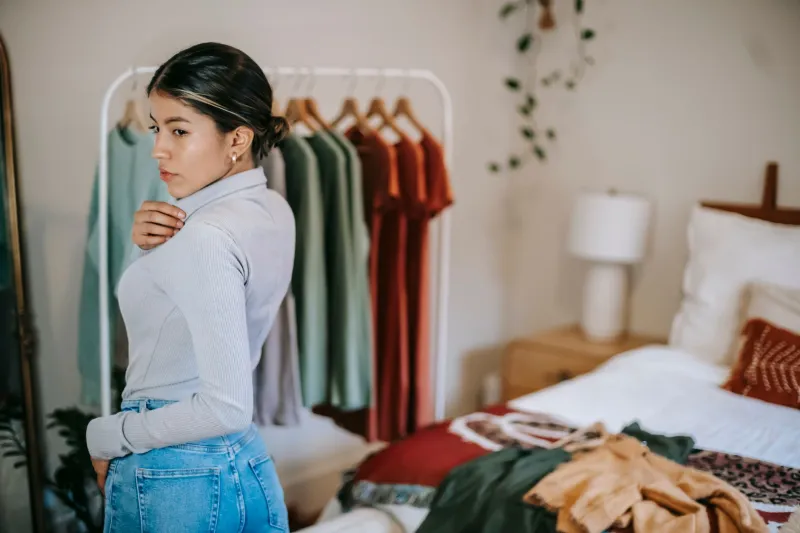
Here's a scene a lot of parents know well: your daughter emerges from her room wearing something you definitely did not plan for. Maybe it's a tutu over leggings with mismatched socks and a headband that belongs to another outfit entirely. Your first instinct? We have to leave in ten minutes.
But before you redirect her back to the closet, consider this — that moment of bold, unapologetic self-expression? It might be one of the most important things she does all day.
Fashion confidence in girls isn't really about fashion. It's about something much harder to teach and much more valuable to carry through life.
The Closet Is a Practice Room
Child development researchers have long noted that self-directed play builds executive function — the mental skills kids use to plan, make decisions, and manage their emotions. What doesn't always make the headlines is that getting dressed, when a child is genuinely in charge of it, functions the same way.
Every morning your daughter chooses an outfit, she's running through a quiet decision-making process: What do I feel like today? What do I want to say about myself? What makes me feel ready? These aren't trivial questions. They're early versions of the same questions she'll ask herself before a job interview, a hard conversation with a friend, or a moment when she needs to advocate for herself in a room full of people who aren't listening.
Dr. Renee Engeln, a body image researcher and author of Beauty Sick, has written extensively about the difference between dressing to perform for others versus dressing as an act of self-expression. Girls who learn early that their clothing choices are theirs — not a performance for external approval — develop a fundamentally different relationship with self-worth. They internalize the idea that they get to decide what feels right for them. That's a skill that transfers.
When She Speaks Up in the Closet, She Speaks Up Everywhere
Tara, a mom of three from outside Nashville, Tennessee, noticed something interesting when she stopped overriding her seven-year-old's clothing choices. "She started arguing for herself more at the dinner table. She'd push back if she thought something was unfair. At first I thought she was just getting sassier," Tara laughs. "But her teacher told me she'd started raising her hand more in class and sticking up for friends on the playground. It was the same energy."
That's not a coincidence. When girls experience the cycle of I chose this → I felt good in it → the day went okay, they build evidence for a core belief: my instincts are trustworthy. And trustworthy instincts are what allow a girl to say "that doesn't feel right" when peer pressure shows up, to tell a coach when something is wrong, or to disagree respectfully with a teacher when she knows the answer is different.
Self-advocacy doesn't arrive fully formed in adolescence. It's built in small, low-stakes moments — and few moments are lower stakes than picking out Tuesday's outfit.
The Problem With Always Stepping In
None of this means parents should disappear from the picture. Guidance about weather-appropriate clothing, dress codes, and occasion-specific outfits is completely reasonable. The issue arises when correction becomes the default — when a girl's choices are routinely redirected based on adult aesthetics rather than actual necessity.
When that happens, the message she receives isn't let me help you think this through. It's your judgment doesn't count here. Repeated over time, that message shapes how she approaches decisions in general. She learns to wait for approval before committing. She second-guesses herself. She looks outward for validation instead of inward for confidence.
Jamila, a mom from the Chicago suburbs, described the shift she made when her daughter was in second grade. "I used to change her outfit almost every morning. I told myself it was about looking put-together. But honestly? I just wanted her to look the way I imagined her looking." When she stopped, her daughter's mood in the mornings improved noticeably. "She stopped dreading getting dressed. She started being excited about it. And I started seeing a kid who just seemed more sure of herself overall."
Handling Fashion Rejection Is Practice for Real Rejection
Here's something that doesn't get talked about enough: when a girl chooses an outfit and gets teased for it — or even just receives a lukewarm reaction — and then still feels okay about herself, that's resilience in action.
Rejection is coming for every girl, in some form, at some point. A friend group that shifts. A team she doesn't make. A crush that doesn't work out. The question isn't whether she'll face it, but whether she has the internal resources to absorb it without crumbling.
Girls who've been allowed to make their own style choices and stand behind them — even when other people don't get it — have already practiced the emotional sequence: I chose this. Someone didn't like it. That's okay. I still like it. That sequence, repeated in the low-stakes arena of fashion, becomes a template for navigating bigger disappointments with more grace.
Making Space for Her to Lead
If you want to start giving your daughter more fashion autonomy without it turning into a daily chaos spiral, here are a few practical ways to shift the dynamic:
Give her a real choice, not a fake one. Instead of picking her outfit and asking if she likes it, pull out three or four options and let her build from there. Real agency feels different from curated approval.
Ask questions instead of giving verdicts. "How does that make you feel?" lands very differently than "Are you sure you want to wear that?" One builds self-awareness. The other builds self-doubt.
Let her wear the thing, even when it's not what you'd choose. Unless there's a genuine practical reason not to (it's 30 degrees outside, there's a formal event), let her experiment. The outfit that seems questionable on Monday might be the one she remembers as her favorite.
Talk about style, not just appearance. Ask her what she was going for. Ask her what she loves about a piece. Get curious about her inner fashion world — it tells you a lot about who she's becoming.
The Real Princess Problem
We're all a little worried about raising girls who care too much about how they look. That's a fair concern. But the solution isn't to make clothing feel unimportant — it's to make it feel empowering.
A girl who knows that what she wears is her own choice, her own expression, and nobody else's verdict? She's not obsessing over her appearance. She's practicing self-determination.
And that, more than any perfectly coordinated outfit, is what she'll carry with her long after the dress stops fitting.