The Princess Capsule: How to Build a Tiny Wardrobe With Endless Outfit Combos
Why "More Clothes" Isn't Always the Answer
Every parent has stood in front of a stuffed closet with a daughter who insists she has nothing to wear. It sounds impossible. It's actually completely logical.
When a wardrobe is full of random pieces that don't connect — the dress from a birthday party, the shirt that only works with one specific pair of pants, the three items that were on sale but don't quite go with anything — getting dressed becomes a puzzle with missing pieces. Decision fatigue is real, even for kids.
The capsule wardrobe concept flips the whole thing. Instead of more, you go intentional. You choose a smaller collection of versatile pieces that all work together, so every morning your girl can open her closet and know that basically anything she grabs is going to work.
And the best part? It's actually fun once it clicks.
Start With a Color Palette (This Is the Secret)
Before you buy a single thing, pick your palette. This is the step most people skip, and it's the reason their capsule doesn't actually work.
For a kid's capsule wardrobe, you want:
Two neutrals — think white, cream, gray, navy, or light denim. These are your base pieces. Everything gets built around them.
Two or three accent colors — this is where her personality comes in. Maybe it's blush pink and lavender. Maybe it's coral and turquoise. Maybe it's classic red and gold. Pick colors she actually loves and that work well together.
One "statement" color or print — one fun, bold element that adds sparkle to the whole collection. A floral print, a color-block pattern, a metallic. Just one, so it doesn't compete with everything else.
When every piece in her wardrobe lives within this palette, mixing and matching becomes almost automatic. The lavender top works with the gray leggings. The white skirt works with the coral blouse. It just... flows.
The Core Pieces: Your Princess Capsule Checklist
Here's a breakdown of what a solid girls' capsule wardrobe actually looks like. Aim for somewhere between 20 and 30 pieces total, including shoes and outerwear.
Tops (6–8 pieces)
- 2 plain tees in neutral colors
- 2 tops in her accent colors (can have subtle details like ruffles or embroidery)
- 1 long-sleeve fitted layer in a neutral
- 1 button-down shirt or blouse (works dressed up or down)
- 1–2 graphic or printed tees that fit within her palette
Bottoms (4–5 pieces)
- 2 pairs of pants or leggings in neutrals
- 1 skirt (a versatile length — not too formal, not too casual)
- 1 pair of jeans
- Optional: 1 pair of shorts if seasonally appropriate
Dresses (2–3 pieces)
- 1 casual everyday dress
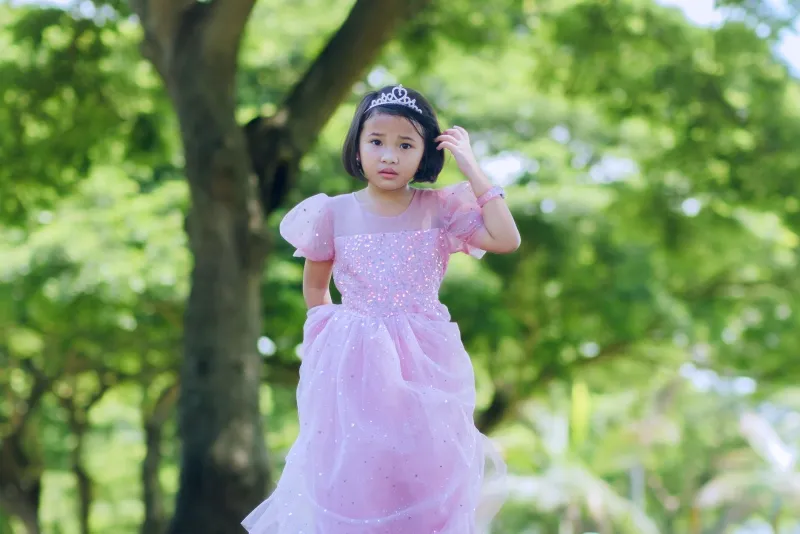
- 1 slightly elevated dress for occasions (can still be fun and sparkly — this is Little Princess territory)
Layers (3–4 pieces)
- 1 denim jacket or light jacket
- 1 cozy hoodie or zip-up in a neutral
- 1 cardigan in an accent color
- 1 weather-appropriate coat
Shoes (3–4 pairs)
- 1 pair of everyday sneakers
- 1 pair of sandals or casual flats
- 1 pair of boots (ankle boots or low boots work for multiple seasons)
- Optional: 1 pair of dress shoes for special occasions
Accessories (5–8 pieces)
- Hair accessories in her palette colors
- 1–2 simple necklaces or bracelets
- A fun bag or backpack
- Seasonal accessories (scarves, sun hats, etc.)
Making Mix-and-Match Feel Like Play
Knowing the theory is one thing. Getting your daughter actually excited about it is another. Here are some ways to make the capsule concept click for her:
The Outfit Challenge Game — Set a timer for five minutes and challenge her to come up with as many different outfits as she can using only the pieces in her capsule. Keep a tally. Kids love this, and it genuinely teaches them how many combinations exist.
The Lookbook Project — Grab your phone and let her photograph her favorite combinations. She can organize them in an album called "My Outfits" so on tired mornings she can just scroll and pick.
The "Two Ways" Rule — When you're shopping together, before you buy anything, ask: "Can you wear this at least two different ways?" If she can't think of two combinations right away, it might not be capsule-worthy.
Color Matching Cards — For younger girls, make simple color-swatch cards for each piece in her wardrobe. She can physically match the cards to see which items go together. It turns getting dressed into a visual puzzle she can actually solve.
Shopping for a Capsule on a Real Budget
Building intentionally doesn't mean spending more. In fact, most families find they spend less once they stop impulse-buying cute pieces that don't actually connect to anything.
A few rules that help:
- Buy quality in the neutrals. Her white tee and her navy leggings are going to get worn constantly. Spend a little more there.
- Go affordable on trends. Accent colors and statement pieces follow trends faster. Hit Target, Old Navy, or H&M for these.
- Thrift for variety. Secondhand stores are goldmines for filling out a capsule with interesting pieces at low cost.
- Resist the one-off purchase. If it's adorable but doesn't match anything she owns, leave it. Or buy it only if you're willing to buy something else to pair it with.
The Real Win: Mornings That Don't End in Tears
A capsule wardrobe isn't just about style — it's about peace. When your daughter knows her closet works, getting dressed stops being a source of stress and starts being a genuinely fun part of her morning.
And when she's the one who helped build it, chose the colors, and picked the pieces? She owns it. That sense of ownership — knowing her wardrobe is hers, put together on purpose — is exactly the kind of confidence we're always trying to build.
So start small. Pick a palette. Pull out the pieces that don't connect. And watch what happens when her closet finally makes sense.