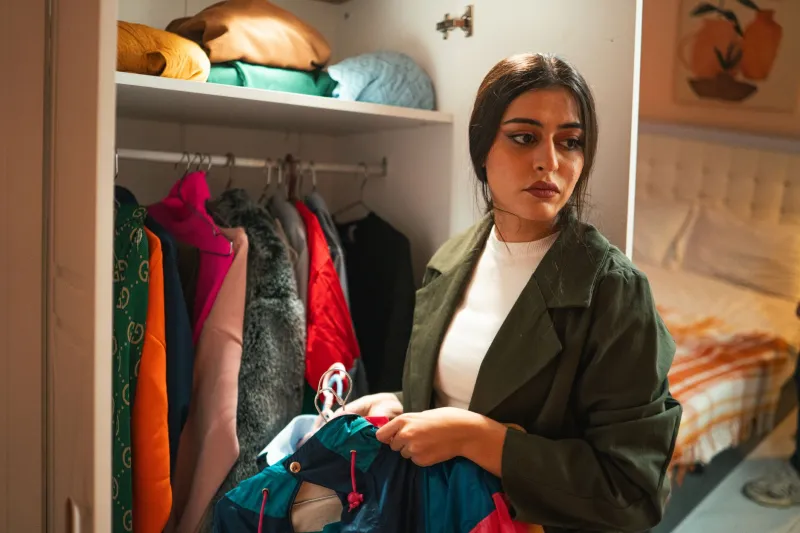
Squad Goals: The Real Reason Your Daughter Wants to Dress Just Like Her Best Friend
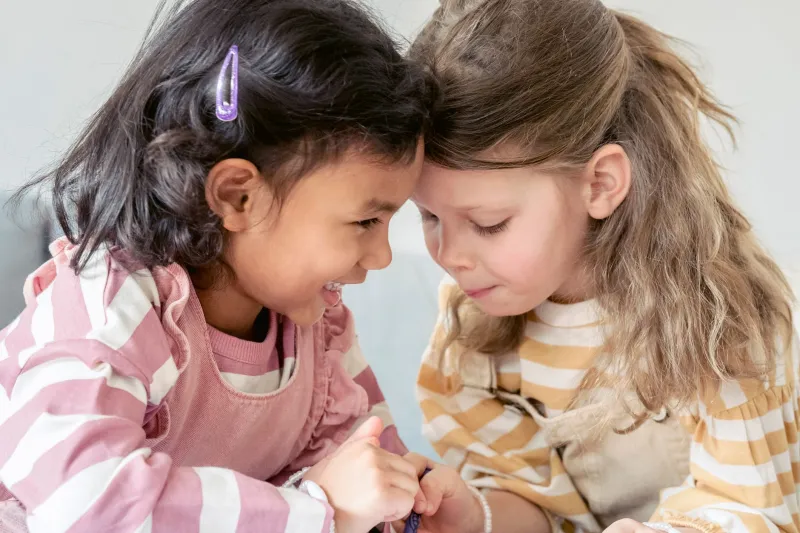
It starts innocently enough. Your daughter comes home from school and announces — with complete certainty — that she needs the same purple hoodie her best friend wore that day. Or maybe she starts gravitating toward the same color palette, the same shoe style, the same hair accessories as her whole friend group. And you find yourself wondering: is this sweet, or should I be worried?
Short answer? It's probably a little of both — and that's totally okay.
Why Matching Is Actually a Love Language
Here's the thing about girls and their friend groups: clothing is communication. When your daughter wants to wear something similar to her bestie, she's not just copying — she's saying I belong here. We're the same. I love you enough to show the world we're connected.
Developmental psychologists have long noted that peer identification is a core part of childhood social development, especially for girls between the ages of 6 and 12. During these years, fitting in isn't vanity — it's a genuine emotional need. Shared style becomes a kind of friendship language, a visual signal that says "we're a team."
Think of it like team jerseys, but make it fashion. When girls coordinate outfits, they're building a sense of community. That feels good. And honestly? It is good.
The Healthy Side of the "Friendship Uniform"
Before you nudge your daughter toward individuality, it's worth pausing to appreciate what the matching impulse is doing for her:
It builds belonging. Feeling like part of a group is one of the strongest emotional needs kids have. When your daughter and her friends show up to school in similar vibes — matching scrunchies, coordinating color schemes, or the same brand of sneakers — it reinforces that she has a place where she's wanted and accepted.
It develops social intelligence. Noticing what others are wearing and understanding the unspoken "rules" of a group actually takes a surprising amount of social awareness. Your girl is reading the room, and that's a skill.
It's often joyful and creative. Let's be real — coordinating outfits with your best friend is genuinely fun. It's a shared project. It's something to text about. It's a reason to get excited about getting dressed in the morning.
So no, the friendship uniform isn't something to squash. It's something to understand.
When It Starts to Get Complicated
That said, there's a line — and it's worth knowing where it is.
The difference between healthy peer influence and losing her identity usually shows up in how your daughter talks about her choices. Listen for phrases like:
- "I don't even like it, but everyone else has one."
- "She said my outfit was weird, so I'm not wearing it anymore."
- "I can't wear that — it's not what our group wears."
Those are signals that the friendship uniform has shifted from connection to conformity. When style choices are driven by fear of rejection rather than genuine affinity, it stops being fun and starts being a pressure cooker.
Another red flag? If your daughter abandons pieces she genuinely loved — not because she outgrew them, but because they don't fit the group aesthetic. That's when it's time for a gentle conversation.
What Parents Can Do (Without Making It Weird)
The goal isn't to lecture your daughter about individuality — because honestly, that approach almost never works and usually just creates eye rolls. Instead, try these low-key strategies:
Make space for both. Instead of framing it as "your style vs. your friends' style," help her see that she can have both. She can absolutely rock the same sneakers as her bestie AND still express something uniquely her — maybe through a jacket, a bag, or the way she styles her hair.
Shop together, but ask the right questions. When you're out looking for that must-have item, ask her: Do you actually love this, or does it just feel like something you should want? Keep it light and curious, not interrogative.
Celebrate her individual choices out loud. When she wears something that's distinctly her — something she picked because she genuinely loves it — notice it. Say something. "That color looks so good on you, and it's so you." Positive reinforcement goes a long way.
Talk about your own friendship style moments. Share a story from your own childhood about wanting to dress like your friends. It normalizes the experience and opens the door for her to talk more freely about what's going on in her social world.
The Bigger Picture
Here's the truth about the friendship uniform: it's not a phase to be fixed. It's a stage to be navigated thoughtfully. Girls who feel secure in their friendships — who feel seen and accepted by their peers — are actually more likely to experiment with their individual style over time, not less.
When belonging feels safe, creativity has room to grow.
So let her have the matching moment. Buy the hoodie. Coordinate the scrunchies. And while you're doing it, keep gently reminding her — through your words, your curiosity, and your own relationship with style — that the most stylish thing she'll ever wear is her own confidence.
Because the best friendship uniforms? They leave plenty of room for the individual to shine through.