When She Picks Her Own Outfit, She's Practicing Being Brave

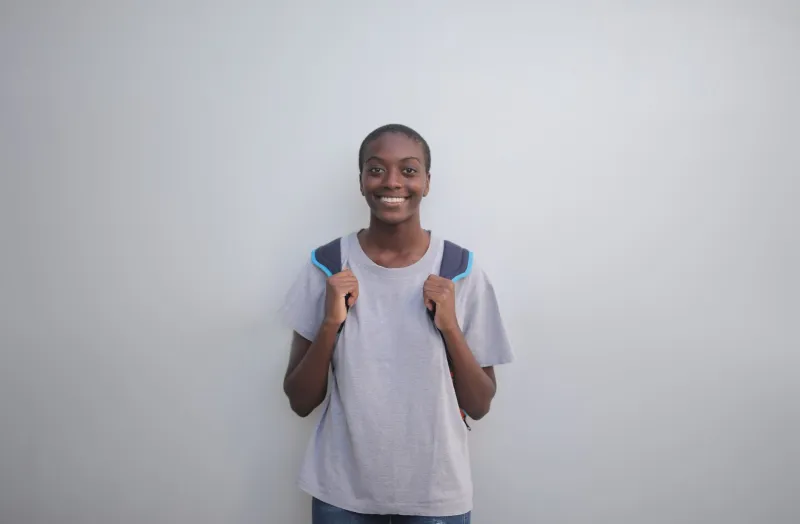
Photo: young girl confidently choosing colorful clothes from her closet, via www.thelist.com
It started with a tutu. Worn over leggings. With rain boots. On a perfectly sunny Tuesday.
For Melissa, a mom of three from Austin, Texas, the moment her six-year-old daughter Wren walked out of her bedroom dressed like that — chin up, totally unbothered — something shifted. "I almost said something," Melissa admits. "But I stopped myself. And honestly? It was the best parenting decision I made that week."
Wren didn't just wear that outfit to school. She also raised her hand in class for the first time that day. Coincidence? Maybe. But a growing body of research — and a whole lot of moms who've been paying attention — suggests the connection between fashion autonomy and real-world confidence runs deeper than we might expect.
The Closet as a Classroom
Child development experts have long understood that autonomy — the ability to make meaningful choices — is one of the core building blocks of healthy self-esteem. And for young girls especially, the wardrobe turns out to be one of the earliest, most accessible places where that autonomy can be practiced every single day.
Dr. Rebecca Sheridan, a developmental psychologist based in Chicago who works with school-age children, puts it plainly: "When we allow girls to make decisions about how they present themselves to the world, we're essentially giving them a low-stakes training ground for bigger decisions later on. They learn that their preferences matter, that their choices have outcomes, and that they can recover from choices that don't go the way they planned."
Think about what actually happens when a child picks her own outfit. She's weighing options. She's imagining how something will feel. She's predicting how others might respond. She's expressing something internal in a visible, external way. That's not just getting dressed — that's a full cognitive and emotional workout happening before 8 a.m.
"But What Will People Think?"
Here's the part that trips up a lot of parents: the fear that an unconventional outfit will invite teasing, judgment, or social difficulty. It's a real concern, and it comes from a genuinely loving place.
But here's what the research actually shows. Girls who are consistently allowed to make their own style choices — even the weird ones, especially the weird ones — tend to develop stronger resilience when faced with peer pressure or social discomfort. They've already practiced standing in their decision. They know what it feels like to choose something for themselves rather than for someone else's approval.
Jordan, a mom from Portland, Oregon, watched this play out with her daughter Zoe, now nine. "Zoe went through a phase where she only wanted to wear one specific orange cardigan. Every day. For weeks. I let her. Some kids noticed. She shrugged it off." Jordan laughs softly. "Now she's the kid who pushes back when her friend group tries to pressure her into things she doesn't want to do. I honestly think it's connected."
The Difference Between Guidance and Override
None of this means parents should disappear from the picture entirely. There's a big difference between overriding a child's choices and gently guiding her through them.
The goal isn't to hand a seven-year-old a full wardrobe and walk away. It's to create a framework — a curated closet of options you're genuinely happy with — and then let her take it from there. When everything in the drawer is something you'd be comfortable with her wearing, the stakes of "getting it wrong" drop considerably. She wins. You win. Everybody goes to school.
Dr. Sheridan recommends what she calls the "yes, and" approach. "Instead of saying 'no, not that,' try 'yes, and here's what else might work with it.' You're not shutting down her instinct — you're collaborating with it. That models something really valuable: that her ideas are worth building on, not just correcting."
For younger girls, offering two or three pre-approved options is a great starting point. As they grow, the range can widen. The point is that the choice is genuinely hers, not a performance of choice that circles back to what you wanted anyway.
When the Unconventional Outfit Is the Whole Point
Sometimes a girl doesn't want to blend in. Sometimes she wants to be the only one in the room wearing a sequined vest on a Wednesday. And that impulse — that desire to stand out, to be visibly herself — is worth protecting.
Culture sends young girls a lot of messages about fitting in, about not taking up too much space, about being likable above all else. A girl who has practiced being visible in her own choices — who has worn the thing she loved even when it was different — has a little more armor against those messages.
Tamara, a mom from Atlanta, noticed this with her daughter Priya after a particularly bold fashion phase involving mismatched prints and homemade jewelry. "She started speaking up more. In class, at the dinner table, with her cousins. She got comfortable with being 'the one who does things differently.' That was her identity, and she owned it."
Fashion was the first place Priya tried on that identity. It wasn't the last.
Building the Confidence Closet
So what does this look like in practice? A few ideas to get started:
Involve her in the shopping process. Even if you set the budget and the boundaries, let her have real input on what comes home. When she helped pick it, she's more likely to wear it with conviction.
Resist the urge to edit every morning. Save the feedback for genuine safety issues (weather-appropriate clothing, dress codes) rather than aesthetic ones. Her confidence doesn't need your approval — and it grows when it doesn't need it.
Celebrate the bold choices. When she walks out in something unexpected and owns it, tell her she looks amazing. Mean it. You're reinforcing that self-expression is worth celebrating.
Let the mistakes happen. If she wears something she later decides she doesn't love, that's data. She's learning to understand herself. That's the whole point.
Talk about style as identity, not performance. Help her understand that what she wears is a reflection of who she is — not a bid for approval from anyone else.
The Bigger Picture
At Little Princess, we talk a lot about sparkle — and we mean it literally and figuratively. A girl who knows her own style has a kind of inner sparkle that shows up everywhere: in the classroom, on the playground, in friendships, in the moments that require real courage.
That sparkle isn't something you can buy. But you can absolutely nurture it — one outfit choice at a time.
The girl who picks her own clothes in the morning is practicing something essential. She's learning that her voice counts. That her instincts are worth following. That being herself is not just okay — it's the whole goal.
And honestly? That might be the most important thing she wears all day.